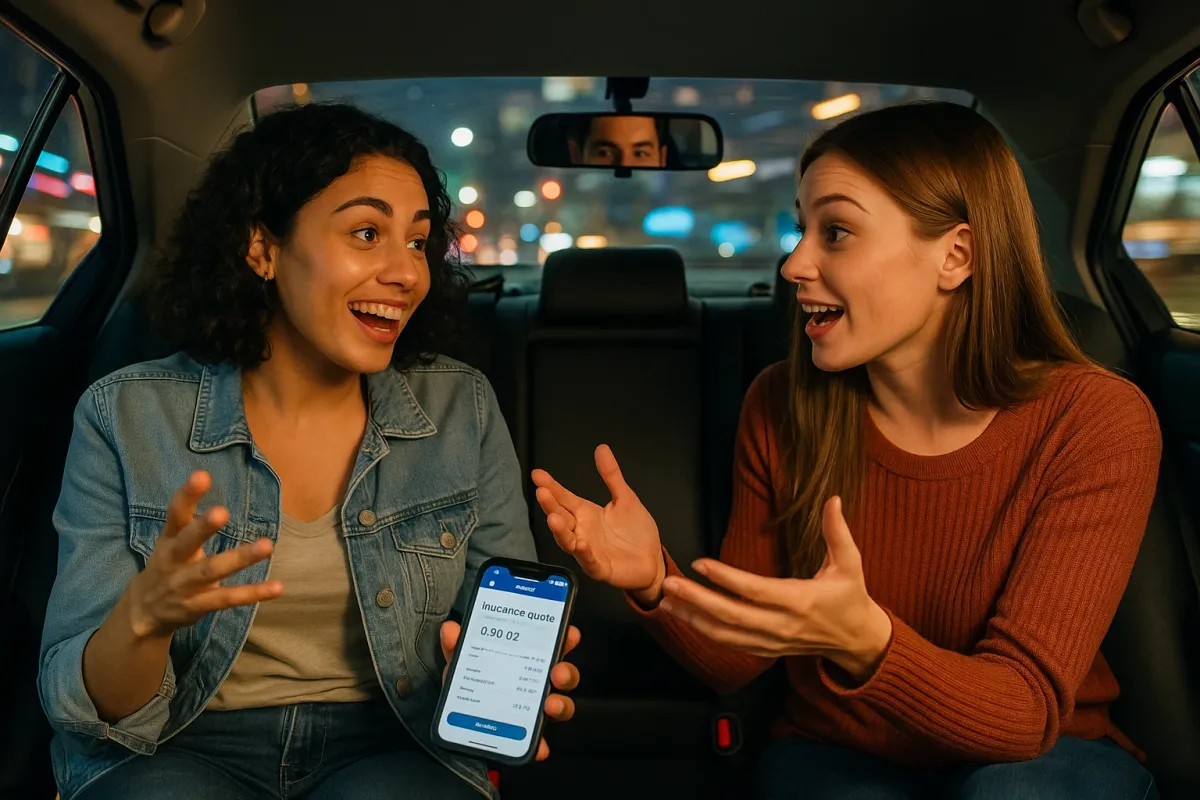
You know those wild, unfiltered convos you overhear in an Uber and immediately want to text your group chat about? That’s basically what just happened with a trending article rounding up “overheard in Uber” stories: riders spilling everything from money problems to messy breakups… right in the back seat. And here’s the twist nobody’s talking about—those same ride-share habits and life choices can totally change what you pay for car insurance (or whether you need it at all).
As people lean harder into Uber, Lyft, and other ride apps instead of owning a car—especially in big cities—your “transportation lifestyle” is becoming one of the most underrated factors in your insurance quote. So let’s ride the wave of those viral Uber confessions and flip them into something useful: smarter, cheaper insurance moves you’ll actually want to share.
Below are five ultra-timely, scroll-stopping angles you need to consider next time you compare quotes online.
1. “I Don’t Even Own a Car” – Why You Still Might Need a Quote
In those Uber stories, there’s always that one person flexing: “I don’t even own a car anymore, I just Uber everywhere.” Relatable. With urban car ownership dropping and ride-shares climbing, a lot of people think that means: no car = no car insurance = problem solved.
Not quite.
If you regularly borrow friends’ cars, rent a vehicle for trips, or mix in car-share apps like Turo or Zipcar, you’re still exposed. One accident in a borrowed or rented car can get messy fast—especially if the owner’s policy isn’t built for how you’re using it. That’s where non-owner car insurance comes in. Many comparison tools now let you specifically select “I don’t own a car” and pull quotes for liability-only coverage that follows you, not the vehicle. It’s usually way cheaper than standard car insurance and can plug coverage gaps when the “I just Uber everywhere” lifestyle collides with real life. When you’re quote-shopping, always tick the box that best matches what you actually do—not what you think sounds simpler.
2. Ride-Share Side Hustle? Your Personal Policy Might Not Have Your Back
Those Uber-overheard lists always feature at least one driver casually admitting their whole life story: juggling jobs, grinding side hustles, and driving 6+ hours a day to keep the bag coming in. If that’s you—or you’re even thinking about turning your car into income—your quote comparison needs a reality check.
Most personal auto policies do not cover you while you’re using your car for commercial purposes, like driving for Uber, Lyft, DoorDash, or Instacart. Ride-share apps offer their own coverage, but it often has big deductibles and doesn’t fully protect you in the “app on, no passenger yet” limbo. When you compare quotes, look for options that explicitly say “ride-share endorsement” or “transportation network company coverage.” Some major insurers now let you toggle “I drive for Uber/Lyft” in the quote form, and the price change can be surprisingly small compared to the risk you’re actually taking. If you’ve been hiding the side hustle from your insurer, this is your wakeup call: one claim could be denied if they find out you were driving commercially on a personal-only policy.
3. That Wild Late-Night Uber Chat? Your Location Is Silently Pricing You In
The original Uber article proves one thing: late-night rides are where the chaos lives—oversharing, drama, and “I can’t believe I just said that” moments. Insurance companies don’t hear your gossip, but they do “hear” something else: your ZIP code.
If you’ve ever seen your quote jump just because you moved a few blocks, that’s not a glitch. Insurers look at localized data: accident frequency, theft rates, claim volume, even how dense the traffic is in your area. At the same time, fewer people owning cars in city cores and leaning on Uber, Lyft, and public transit can start to shift risk trends over time. That’s why comparing quotes is basically non-negotiable every time you move, even if your car and driving habits don’t change. When you run quotes:
- Always test your exact new address, not just the general city.
- Try different coverage levels to see if bumping your deductible or adjusting limits makes more sense in your new neighborhood.
- Look for insurers advertising “urban driver” or “city-friendly” discounts—some are actively targeting people who drive less but still want solid coverage.
Your nightly Uber confessions might be private, but your postcode is not—and it’s quietly reshaping your quote.
4. Your “I Barely Drive” Era = Massive Mileage Leverage in Quotes
In those ride-share stories, you’ll often catch people admitting they only drive on weekends, or their car is basically a “Target + Costco” machine. Combine that with work-from-home staying strong in 2025, and you’ve got a whole generation of drivers clocking way fewer miles than pre-2020.
Insurers love lower mileage—if you tell them.
When you compare quotes today, you’ll notice way more questions about your annual mileage and daily commute. A bunch of companies have already doubled down on pay-per-mile or low-mileage discounts because so many people are living the “car when I absolutely need it, Uber when I don’t” lifestyle. Here’s the play:
- Be brutally accurate about your mileage—rounding up “just because” can cost you money.
- Run back-to-back quotes changing only your annual mileage number to see the price sensitivity.
- Check if any companies on your comparison results offer usage-based apps that track driving habits; light, safe drivers often win big on those.
If Uber and remote work have turned you into an occasional driver, that’s not just a lifestyle flex—it’s a bargaining chip when you’re shopping quotes.
5. That Awkward “Who’s Paying?” Moment Mirrors Your Coverage Gaps
You know the scene: end of the Uber ride, four people in the back, someone mumbles “I’ll Venmo you later,” nobody’s quite sure who’s actually picking up the tab. That exact confusion is how many drivers walk into their insurance situation—especially when they share cars, live with roommates, or drive a partner’s vehicle.
When you compare quotes, don’t just think “my car, my price.” Think in terms of who drives what, and how often. Did your roommate get added as a driver? Do your parents still technically own the car you use every day? Does your partner occasionally drive your ride-share vehicle? Many insurers rate and price your policy based on all regular drivers in your household—even if they’re not on the title. On comparison sites, watch for fields like:
- “Other licensed drivers in your household”
- “How often is this driver using the vehicle?”
- “Primary vs. occasional driver”
Answering those honestly lets you see which companies are more forgiving, especially if someone in the house has a weak driving record. Some insurers will let you exclude certain drivers (with their consent), while others won’t. That difference can be worth serious money—and you’ll only spot it if you’re comparing quotes across multiple carriers, not just auto-renewing on autopilot.
Conclusion
The “overheard in Uber” trend proves one thing: our rides say a lot about how we actually live, not just how we say we live. And in 2025, that’s exactly the kind of real-life behavior insurers are quietly pricing into their quotes—how much you drive, whether you side-hustle with Uber, if you own a car at all, and who really sits behind your steering wheel.
If your life looks more like a ride-share feed than a 9-to-5 commuter commercial, your old-school insurance setup probably doesn’t match your reality anymore. Use that to your advantage. Next time you’re comparing quotes, think like a driver, a rider, and a hustler: minimal miles, clear usage, honest side gigs, and every discount you can unlock from the way you actually move through your city.
Then send this to that friend who “just Ubers everywhere” and still hasn’t checked what’s really covering them.
Key Takeaway
The most important thing to remember from this article is that this information can change how you think about Quote Comparison.